Hip pain
Hip pain is confusing because “hip” means three different things to different people: the joint itself (pain usually felt in the groin), the outside of the hip (usually the tendons and bursa there), and the buttock (often the low back or sacroiliac joint in disguise). Sorting out which one you have is most of the work. Here’s what’s commonly going on, what helps, and when imaging or an orthopedist makes sense.
You're in the right place if…
- Getting out of a chair or the car takes a moment and a hand on your knee.
- Stairs, hills, or the first steps in the morning are the worst part.
- You feel it in the groin when you put a sock on or cross your legs.
- The outside of your hip aches when you lie on it at night.
- You're a runner, golfer, or gym regular and your hip is the thing limiting you.
What's commonly going on
Groin pain with stiffness — especially trouble rotating the leg or putting on shoes — often points to the hip joint, which can be irritated by overuse, a labral problem, or, over 50, early osteoarthritis. Pain on the outside of the hip that’s worse lying on that side is usually the gluteal tendons and bursa (gluteal tendinopathy). Buttock pain that changes with bending or sitting is often coming from the low back or the sacroiliac joint, and hip flexor tightness in the front is common in people who sit all day and then train hard. The evaluation is designed to tell these apart, because they’re managed differently.
What you can try this week
- Keep walking and moving; avoid long stretches of sitting, and stand up every 30 minutes.
- For outer-hip pain at night, put a pillow between your knees and avoid crossing your legs or standing with your weight on one hip.
- Gentle hip mobility: knee-to-chest, figure-four stretch within comfort, and glute bridges, five slow reps, a few times a day.
- Ease off the specific activity that reproduces the pain — hill running, deep squats, long drives — rather than stopping everything.
When to be seen — and when to see a physician first
See a physician or go to urgent care if hip pain follows a fall (especially over 60), you can't bear weight, the hip is hot or swollen, you have fever, or you have unexplained weight loss or night pain that wakes you regardless of position. Book an evaluation if it's lasted more than two to three weeks, limits walking or stairs, or keeps returning.
What an evaluation at FIT Clinic looks like
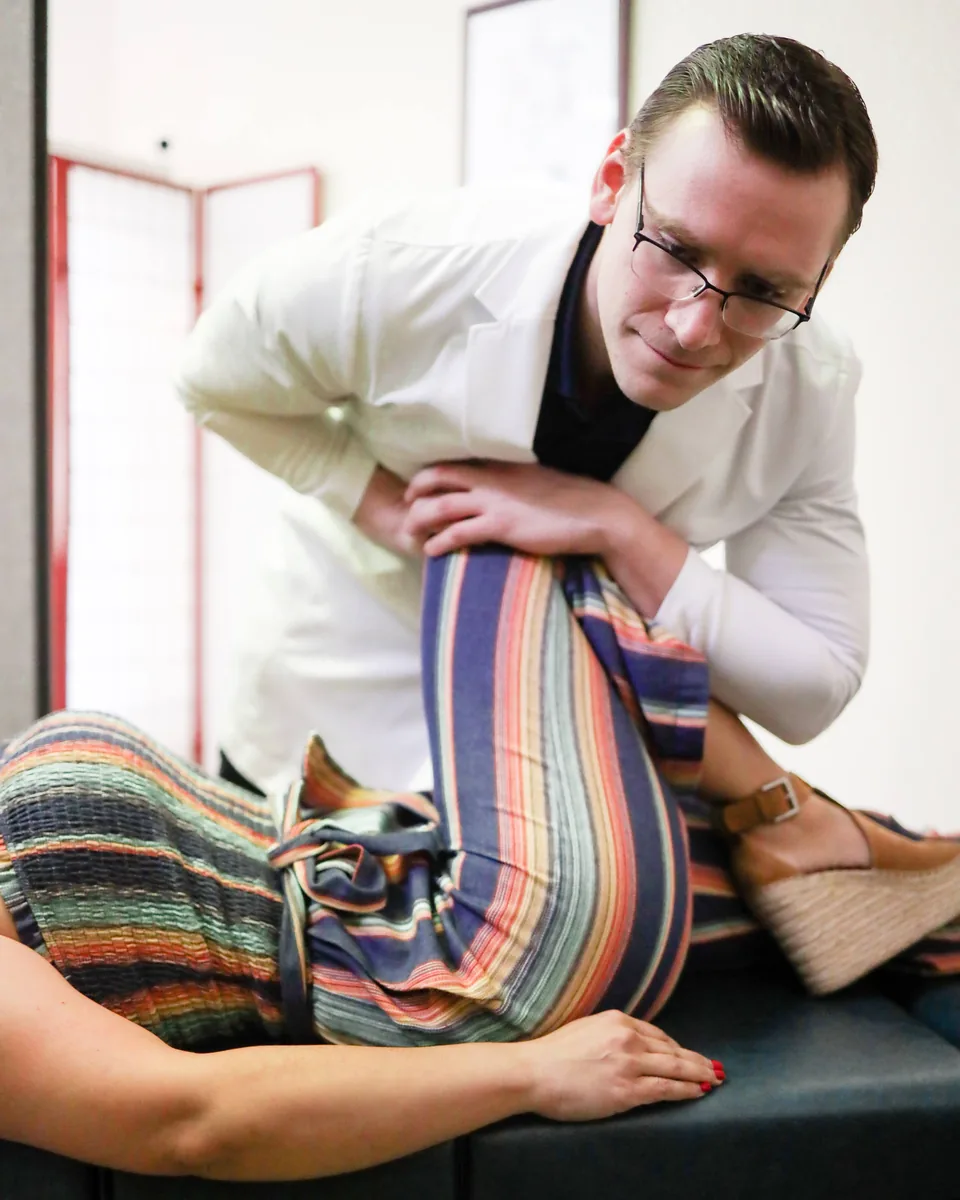
Dr. Brandon will watch you walk and squat, test how far the hip rotates and flexes, check strength in the glutes and hip flexors, examine the low back and sacroiliac joints, and press on the tendons on the outside of the hip. If the pattern suggests joint arthritis, a labral tear, or anything that needs imaging or an orthopedist, he’ll say so and refer — and if it’s coming from your back, you’ll hear that too.
No treatment plan to sign on day one.
What care may include, and what the evidence says
Care usually combines hands-on work on the hip, pelvis, and low back; soft-tissue treatment of the glutes and hip flexors; and a progressive strengthening program for the hip, which is what the evidence supports most for both tendon-related and arthritic hip pain. We’ll be direct: manual care can’t reverse arthritis, and the research on manipulation for hip pain specifically is limited; what it can often do is improve how the joint moves and how much it limits you, alongside your physician’s plan.
Questions
Is it arthritis?
Possibly, over 50 with groin pain and stiffness. An X-ray verifies it; the plan is still movement and strength, and we coordinate with your physician.
Could my hip pain be coming from my back?
Often. That's one of the main things the evaluation checks.
Do I need to stop running?
Usually modify before you stop: shorter, flatter, softer, and build back as the hip tolerates it.
Cost
First visit: $0 consultation and exam for new self-pay patients. Free benefits check by text: 848-301-1515.
The no-charge consultation and exam is for new self-pay patients. If you have Medicare, NJ FamilyCare/Medicaid, or another federal or state health program, your visit is billed under that program's rules, and you'll know your cost before anything happens. If you have private insurance, the exam is billed to your plan and normal copays apply — text us a photo of your card with the word BENEFITS for a free benefits check first.