Shoulder pain
“Dr. Mike at FIT Clinic is hands-down the best chiropractor I’ve seen.”
Individual experiences shared by patients; results vary.
The shoulder is the most mobile joint in the body, which is why it's so easy to irritate — reaching overhead, sleeping on it, a season of golf or swimming, or a week of pressing at the gym. The first job is figuring out whether the problem is the shoulder itself, the tendons around it, or your neck sending pain into it. Here's what's commonly going on, what helps, and when to see an orthopedist instead.
You're in the right place if…
- Reaching overhead, behind your back, or into the back seat hurts.
- You wake up when you roll onto that side.
- It aches after pressing, throwing, swimming, or a round of golf.
- Your shoulder feels stiff and you've lost some range without a clear injury.
- Pain runs from your neck into the top of the shoulder and you're not sure which one started it.
What's commonly going on
Most non-traumatic shoulder pain involves the rotator cuff tendons and the bursa above them getting pinched or overloaded (often called impingement or rotator cuff tendinopathy), a stiff joint capsule, or a mid-back and shoulder-blade that aren’t moving well enough, which forces the shoulder to compensate. Neck problems can also refer pain into the shoulder; the tell is that neck movement changes the pain. A sudden loss of strength after an injury can mean a tear and needs imaging. Elbow pain from gripping and lifting (“tennis” or “golfer’s” elbow) often travels with shoulder and neck stiffness and is evaluated the same way.
“I can’t say enough great things bout Dr.”
Individual experiences shared by patients; results vary.
What you can try this week
- Keep the shoulder moving in ranges that don’t hurt; total rest tends to stiffen it.
- Modify, don’t stop: lower the weight, avoid the overhead and behind-the-back positions that pinch, keep rows and pulls.
- Sleep on the other side with a pillow in front of you to support the arm.
- Gentle shoulder-blade squeezes and wall slides, five slow reps, a few times a day.
When to be seen — and when to see an orthopedist or physician first
See a physician or orthopedist first if: you can't lift the arm after a fall or injury; the shoulder looks deformed; there's sudden significant weakness; you have fever, redness, or swelling in the joint; or shoulder pain comes with chest pain, shortness of breath, or pain into the jaw (call 911). Book an evaluation if pain has lasted more than two to three weeks, is stopping you from sleeping or training, or you've lost range of motion.
What an evaluation at FIT Clinic looks like
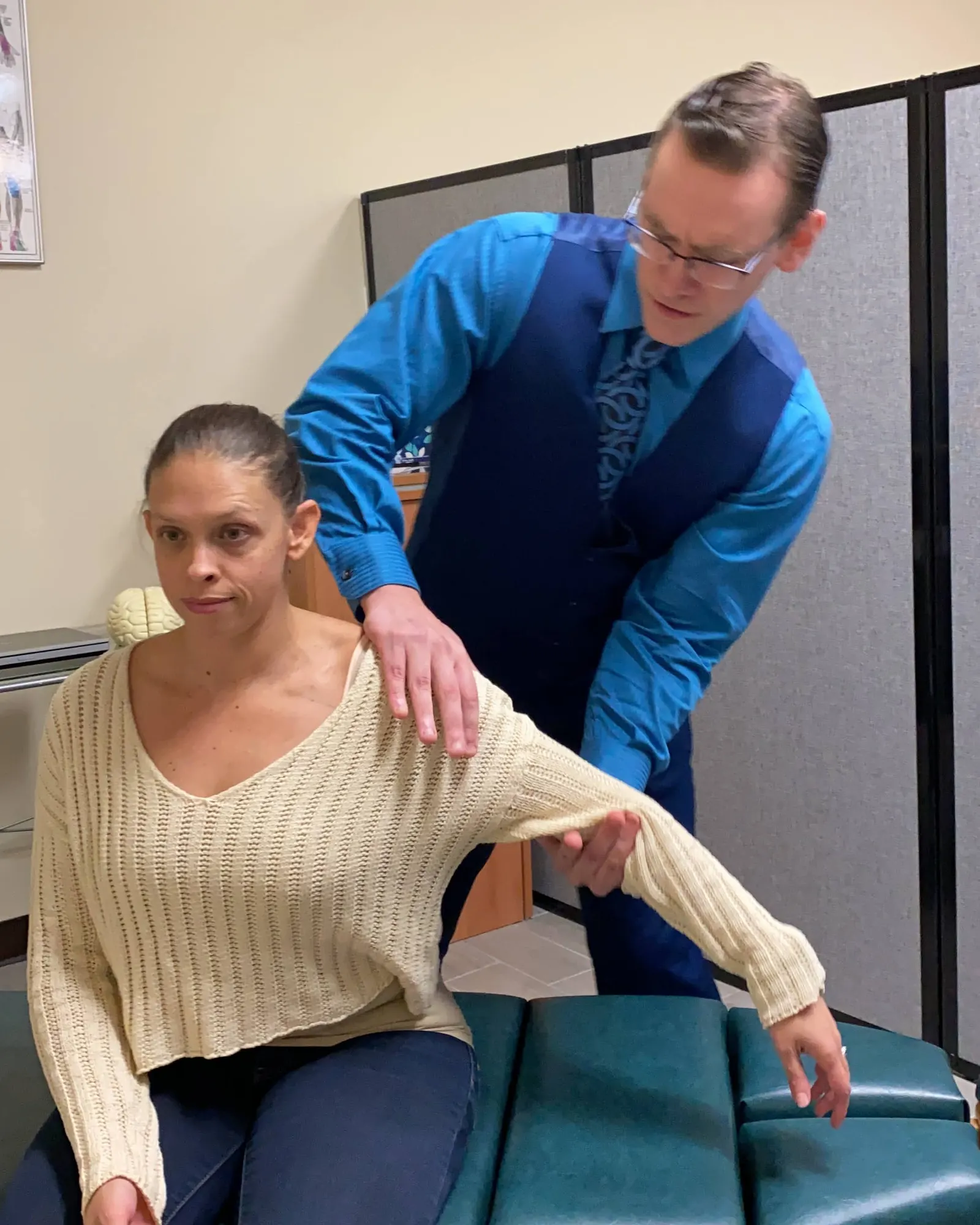
Dr. Brandon will check how far and how well the shoulder moves, test the rotator cuff muscles individually, look at how the shoulder blade tracks against the ribcage, and examine the neck and mid-back to see whether they’re driving the problem. If the findings suggest a tear, a frozen shoulder that needs a physician’s input, or anything outside our scope, he’ll say so and refer.
No treatment plan to sign on day one.
“Dr. Mike at FIT Clinic is hands-down the best chiropractor I’ve seen.”
Individual experiences shared by patients; results vary.
“I can’t say enough great things bout Dr.”
Individual experiences shared by patients; results vary.
What care may include, and what the evidence says
Care typically combines hands-on work on the shoulder, mid-back, and neck; soft-tissue treatment of the cuff and surrounding muscles; and a progressive loading program for the cuff and shoulder blade, which is what the evidence supports most for cuff-related pain. Manual therapy has some support for short-term pain relief and range of motion, especially combined with exercise; the exercise is the part that lasts.
What people tell us
“Dr. Mike at FIT Clinic is hands-down the best chiropractor I’ve seen. He’s incredibly knowledgeable, thorough, and truly cares about long-term wellness. I’ve seen real improvements thanks to his personalized care. Highly recommend!”
“I can’t say enough great things bout Dr. Brandon. As a competitive athlete with Spartan races and CrossFit, I’m constantly challenging my body and Dr. Brandon has been able to “fix” me on several occasions so I could compete. His knowledge and experience never cease to amaze me and I recommend him to my gym and friends.”
Google rating 4.7 out of 5 from 39 reviews. Read them all on Google
Individual experiences shared by patients; results vary.
Questions
Is it a rotator cuff tear?
Tendon irritation is far more common than a tear. Weakness that doesn't improve, or pain after a specific injury, is what prompts imaging.
Do I need an MRI?
Not unless the exam suggests a tear or another structural problem; many people without pain have MRI findings.
Can I keep lifting?
Usually, with modifications. The evaluation will tell you exactly which movements to change.
Related reading
Pickleball Injury Colts Neck: What Falls and Lunges Do
Key takeawaysA pickleball injury Colts Neck players bring in usually fits a short list.Sprains and strains, fractures, and Achilles tendon ruptures lead it.
Why Old Injury Pain Winter Flare-Ups Happen, and What Helps
Key takeawaysOld injury pain winter flare-ups are real, and they are explainable.Cold stiffens the tissue around an old injury.
How long does a sports injury take to recover, and what slows it down?
Last updated September 20, 2026 A sports injury recovery timeline is set by tissue healing stages and movement testing, not by the day your pain stops.…
Cost
First visit: $0 consultation and exam for new self-pay patients. Free benefits check by text: 848-301-1515.
The no-charge consultation and exam is for new self-pay patients. If you have Medicare, NJ FamilyCare/Medicaid, or another federal or state health program, your visit is billed under that program's rules, and you'll know your cost before anything happens. If you have private insurance, the exam is billed to your plan and normal copays apply — text us a photo of your card with the word BENEFITS for a free benefits check first.
“Dr. Mike at FIT Clinic is hands-down the best chiropractor I’ve seen.”
Individual experiences shared by patients; results vary.