Chiropractic care, explained
Chiropractic care at FIT Clinic is hands-on care for problems with how your joints, muscles, and nerves work together — mostly the back, neck, hips, and shoulders. It starts with an evaluation, not a treatment, and it’s one option among several. This page explains what care involves, what the research supports, who it helps, and when we’ll tell you to see someone else.
Who it's for
People with back pain, neck pain, sciatica, shoulder or hip pain, headaches that come from the neck, sports and activity-related injuries, and the stiffness that creeps in from desk work, driving, or age. Also people who have tried rest, medication, or physical therapy and want another honest look.
Who it isn't for
Chiropractic care is not the right first stop for fractures, infections, unexplained weight loss, fever with back pain, new bowel or bladder problems, progressive weakness, chest pain, or the worst headache of your life. Those need a physician or an emergency department first. It also isn't a treatment for conditions outside the musculoskeletal system, and we won't pretend otherwise.
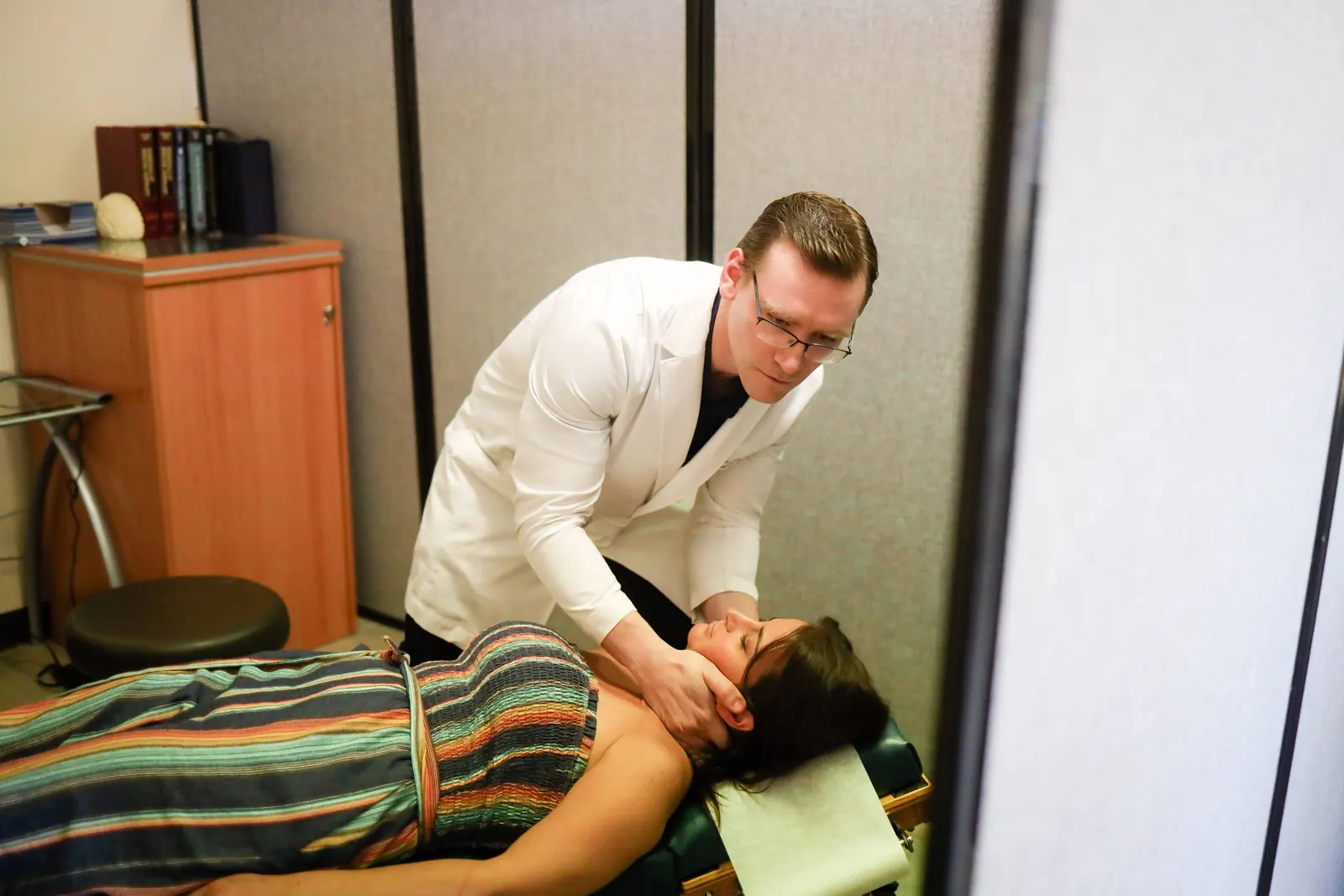
What care may include
- Spinal and joint adjustment (manipulation). A quick, controlled movement to a joint that isn’t moving well. You may hear a pop; most people find it more relieving than uncomfortable. Always explained first; gentler, low-force options are available.
- Soft-tissue work. Hands-on treatment of muscles and connective tissue that are tight or irritated.
- Mobility and exercise. Specific movements to do at home, because what you do between visits matters as much as the visit.
- Guidance. Sitting, lifting, training load, sleep position, and when to push and when to back off.
“I can’t say enough great things bout Dr.”
Individual experiences shared by patients; results vary.
Is it safe?
For most people, yes. The common side effects are mild and short — soreness, stiffness, or fatigue for a day or two, similar to a hard workout. Serious complications are rare.
Tell us about any history of stroke, blood-clotting disorders, osteoporosis, cancer, inflammatory arthritis, or spinal surgery, and about the medications you take; care is adapted to you, and neck adjustments in particular are always discussed before they're done.
The National Center for Complementary and Integrative Health has a plain-English summary of the safety evidence.
What the research says
We’d rather you hear this from us than find it later. Research on spinal manipulation is strongest for low-back pain and neck pain, where it’s associated with small-to-moderate improvements in pain and function, comparable to other recommended conservative treatments, and it’s one of the non-drug options that clinical guidelines list for these problems. Evidence for sciatica is more limited. For headaches, there is some support when the headache is coming from the neck. For conditions that aren’t musculoskeletal, there’s little high-quality evidence, which is why we don’t treat them as such. Your response can differ from the averages, and we’ll tell you honestly within a few visits whether care is doing what we hoped.
What we evaluate — and when we refer
People ask about conditions we don’t advertise, so here is the straight version:
- Scoliosis. We can evaluate posture and movement, help with pain and stiffness that come with a curve, and monitor. Chiropractic care does not reduce the curve, and children and teens with a suspected curve should be seen by a physician or pediatric orthopedist for imaging and monitoring.
- Fibromyalgia and widespread pain. Gentle manual care and movement can be one part of a broader plan, but the plan is led by your physician. We’ll coordinate, not replace.
- Migraine. Migraine is a neurological condition; we don’t treat migraine itself. If your headaches start in your neck, an evaluation can tell whether neck care might reduce their frequency.
- Carpal tunnel, tennis elbow, tendinitis. We can evaluate and provide manual care and load guidance for many overuse problems; true carpal tunnel syndrome with numbness or weakness needs testing and sometimes a hand specialist.
- “Growing pains” in children. Usually benign and self-limiting; we evaluate when a parent is worried, and we refer to a pediatrician when anything doesn’t fit the pattern.
- Arthritis. We can’t reverse it; we can often help how a joint moves and how much it limits you, alongside your physician’s plan.
“Dr. Mike & the staff are very friendly & professional.”
Individual experiences shared by patients; results vary.
Your first visit
- Meet Dr. Brandon.
- Tell him what’s bothering you.
- Evaluation.
- Findings, in plain English.
- Your options.
- You decide.
About 60 minutes.
Cost and insurance
First visit: $0 consultation and exam for new self-pay patients.
The no-charge consultation and exam is for new self-pay patients. If you have Medicare, NJ FamilyCare/Medicaid, or another federal or state health program, your visit is billed under that program’s rules, and you’ll know your cost before anything happens. If you have private insurance, the exam is billed to your plan and normal copays apply — text us a photo of your card with the word BENEFITS for a free benefits check first.
We accept Medicare; coverage varies. Text a photo of your card to 848-301-1515 for a free benefits check.
Care that works alongside chiropractic
FIT Stretch: one-on-one assisted stretching and performance coaching, led by Jim Goetz, CSCS. It can fit between visits if Dr. Brandon agrees it makes sense for you.
HRV biofeedback training with Chantéa Goetz, MS, CES, for people whose tension and stress run together.
FIT Stretch is assisted stretching and performance coaching; chiropractic care at FIT Clinic is provided by Dr. Michael Brandon, DC.
Biofeedback training is a wellness and performance service. It isn’t chiropractic care, medical treatment or psychological treatment.
“Doc Mike Brandon has been our chiro for the past two years, and he has yet to disappoint us in pretty much any service he has provided.”
Individual experiences shared by patients; results vary.
Questions
Will the adjustment hurt?
Most people don't find adjustments painful. You may hear a pop, which is gas releasing inside the joint. Some people feel mild soreness afterward, like after a workout. Dr. Brandon explains each step first, nothing happens without your OK, and there are gentler techniques if you'd rather not have a traditional adjustment.
Do I need X-rays?
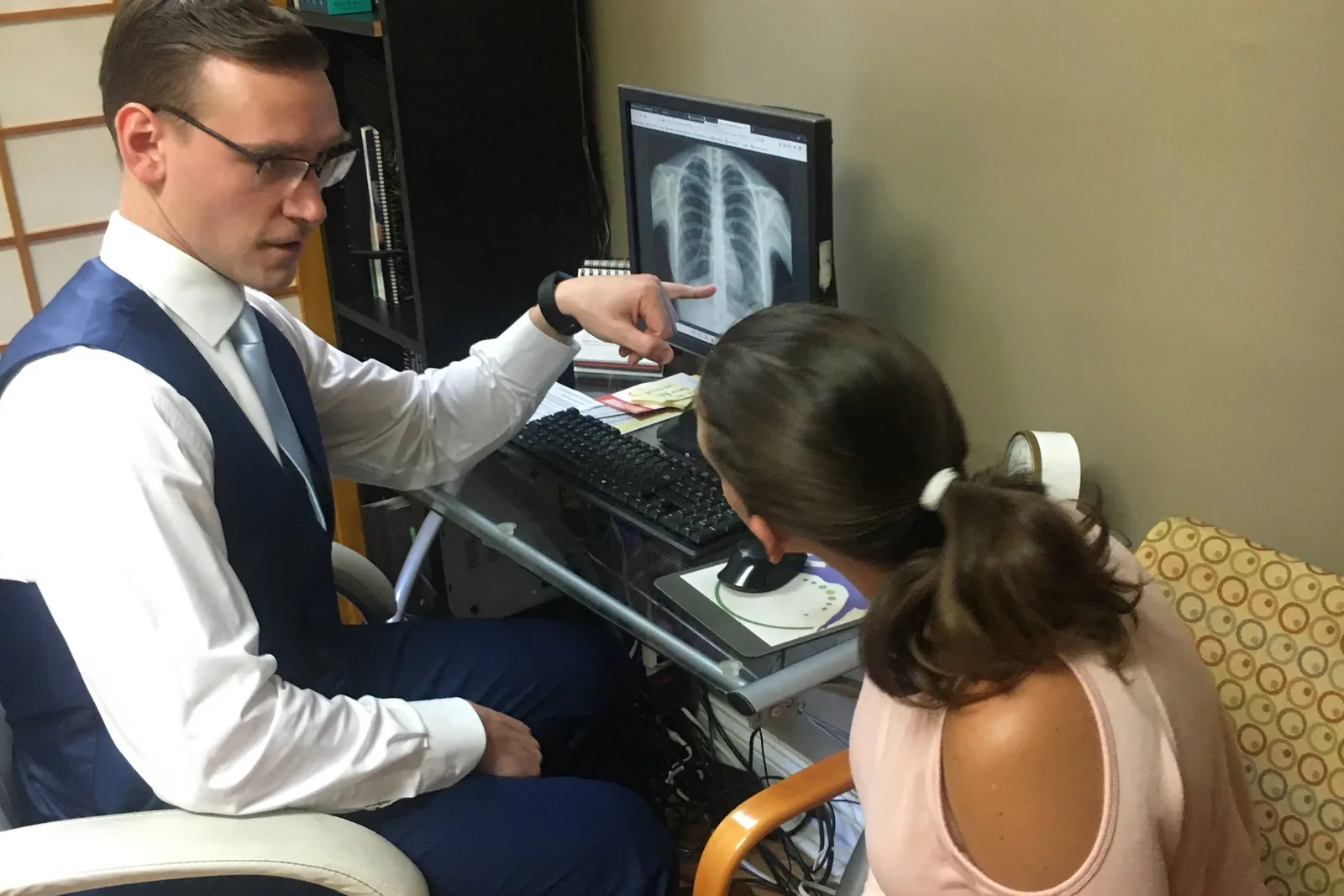
Usually not on the first visit. Imaging is ordered when the exam suggests it would change what we do, or when there's a history of injury or other specific concerns. If Dr. Brandon recommends imaging, he'll explain why first.
Is neck manipulation safe?
This is the question people are most afraid to ask, so here is the answer. For most people, side effects of neck manipulation are mild and short — soreness or stiffness for a day or two. Serious complications are rare. Dr. Brandon will ask about your history — high blood pressure, stroke, blood thinners, connective-tissue conditions, prior spinal surgery — before recommending it, and neck manipulation is never done without discussing it with you first. If you'd rather not, say so: low-force techniques, mobilization, soft-tissue work, and exercise are all options, and many patients do well without a traditional neck adjustment.
What if I've already tried physical therapy?
That's useful information, not a strike against you. Bring what you can about what you tried and what happened. Sometimes a different approach helps; sometimes the right answer is a referral. You'll get an honest read either way.
“Dr. Mike at FIT Clinic is hands-down the best chiropractor I’ve seen.”
Individual experiences shared by patients; results vary.
Not sure yet? Take the 2-minute self-check
Other services at FIT Clinic
Besides chiropractic care with Dr. Brandon, these have their own Colts Neck appointment calendars.
“I can’t say enough great things bout Dr.”
Individual experiences shared by patients; results vary.
Articles on this
Youth Baseball Elbow Pain: Why Pitch Counts Fall Short
Key takeawaysA new screening study found suspected youth baseball elbow pain findings fell by about half after rule changes, and pitch count limits did most of…
Fall Prevention Monmouth County: What the Evidence Says
Most fall prevention Monmouth County advice arrives as a vitamin D bottle and a grab bar.
Integrative Medicine for Pain: An Honest Monmouth Guide
Key takeawaysIntegrative medicine means conventional medical care and complementary approaches such as acupuncture, massage, spinal manipulation, exercise and nutrition used together, in a coordinated way, for…
Leg Pain When Walking That Eases the Second You Stop
Key takeawaysLeg pain when walking that eases the moment you stop usually comes from one of two places: nerves crowded by a narrowing lower spine, or…
Weight Loss Medication Muscle Loss: What the Data Shows
Key takeawaysWeight loss medication muscle loss is part of it, yes.Some of what came off was lean mass.
Medicare Chiropractic Coverage: What Part B Actually Pays
Key takeawaysMedicare chiropractic coverage under Original Medicare comes down to one service: Part B pays for manual manipulation of the spine to correct a documented subluxation,…
Weighted Vest Bone Density: What the Evidence Supports
Key takeawaysA weighted vest may support bone, but only when you are genuinely moving and loading under it.In a 2026 systematic review in Osteoporosis International, vest…
Shoulder Pain Overhead Reaching? What the Pattern Tells You
Key takeawaysShoulder pain overhead reaching, with no pain when you press or carry, usually points to position rather than load.As the arm passes above shoulder height,…
What a Doctor of Chiropractic is trained to do, and when we refer you elsewhere
What a Doctor of Chiropractic is trained to do, what the research supports, and when a chiropractor is the wrong first stop.
Chronic pain: what the research says helps, honestly
Chronic pain rarely has one fix. What the research supports: movement, sleep, manual care, and sometimes a pain specialist.
What patients say
“Dr. Mike at FIT Clinic is hands-down the best chiropractor I’ve seen. He’s incredibly knowledgeable, thorough, and truly cares about long-term wellness. I’ve seen real improvements thanks to his personalized care. Highly recommend!”
“I can’t say enough great things bout Dr. Brandon. As a competitive athlete with Spartan races and CrossFit, I’m constantly challenging my body and Dr. Brandon has been able to “fix” me on several occasions so I could compete. His knowledge and experience never cease to amaze me and I recommend him to my gym and friends.”
“Dr. Mike & the staff are very friendly & professional. They really know how to help improve your quality of life.. I went in to see them & after a couple of visits with Dr. Mike he made me feel relax & got my range of motion with my back good again.”
Google rating 4.7 out of 5 from 39 reviews. Read them all on Google
Individual experiences shared by patients; results vary.
Written by Dr. Michael Brandon, DC
Sources: NCCIH spinal manipulation page; NCCIH low-back pain page; CDC 2022 pain guideline.