Back pain after sitting and deadlifts? Check your hip first.
Key takeaways
- Back pain after sitting and deadlifts may come from tight, tender muscle deep in the hip and buttock, not only from the spine.
- At FIT Clinic the exam comes before any plan.
Back pain after sitting and deadlifts does not always start in the spine. Sometimes it comes from tender tissue deep in the hip and buttock, and three simple clues can point you there. Rule out the red flags first, then try a short daily routine, and have it examined if it keeps coming back.
Why do I get back pain after sitting and deadlifts?
Back pain after sitting and deadlifts may come from tight, tender muscle deep in the hip and buttock, not only from the spine. The hip and the lower back share the load in every hinge, so trouble in one can feel like trouble in the other.
Think about your week. Eight hours in a chair. A drive home. Then heavy pulls on leg day. The muscles around the hip sit short and loaded all day. Then you ask them to brace a barbell. That is a big ask. Clinicians have a name for symptoms that overlap like this: hip-spine syndrome typically presents with low back pain alongside buttock, groin, thigh and knee pain. Researchers have also described the hip examination findings of people who presented with low back pain, which tells you clinicians take the hip seriously when the back hurts.
Here is the real problem. If you only ever treat the spot that hurts, you may be treating the message and ignoring the sender.
What clues suggest the hip is the source?
Three clues. None of them is a diagnosis. Together, they make a pattern worth noticing.
- Timing. The ache is worse after long sitting and after heavy leg days.
- One spot. Pressing deep in the buttock or the side of the hip brings on the familiar ache. You can press one place and say, that’s it.
- Spine movement changes little. Bending forward or arching back does not change the ache much.
Researchers have studied exactly these tender spots. One general-practice study looked at trigger points in the quadratus lumborum and gluteus medius in people with non-specific low back pain and in controls. Another investigated gluteus medius trigger points alongside hip range of movement and hip strength in chronic low back pain. A short-term randomized trial tested dry needling and ischemic compression in the gluteus medius for non-specific low back pain. Responses vary. The evidence is still young. But the hip is on the map.
When is back pain a reason to get help right away?
Some symptoms come first. Before any routine. Before any roller. Go to the emergency department or call 911 for any of these:
- New trouble passing urine, or loss of bladder or bowel control
- Numbness in the saddle area
- New or quickly worsening weakness in the leg or foot
- Back pain with fever, fainting, chest pain or sudden severe tearing pain
These can signal cauda equina syndrome or another serious problem; NHS guidance lists warning signs such as not knowing when your bladder is full or empty and anal or buttock numbness and sciatica in both legs.
Get examined first, before rolling or stretching, if you have pain or numbness below the knee, pain after a fall or a heavy lift with a pop and bruising, pain that wakes you at night or worsens week by week, a history of cancer or unexplained weight loss, pregnancy, osteoporosis or a clotting disorder.
Should I feel deadlifts in my lower back?
Tired, yes. Hurt, no. Working muscles in the lower back may feel tired after deadlifts. A sharp or lingering ache is not the goal. The hips and the posterior chain do most of the work. The spine stays still and braced.
The deadlift itself is not the villain. In a randomized trial of 70 people with mechanical low back pain who followed an 8-week deadlift programme, participants with lower pain and disability levels responded better. That is a study, not a promise. Still, it points somewhere. The lift can help the right person.
The bar is not the question. The desk is. What does eight hours of sitting do to your hips before you ever touch the barbell? Sitting research is mixed: a scoping review of office workers found five studies with no link between sitting time and low back pain and eight that did find one. So sitting may be part of the story for some people. Not for everyone. If you aren’t testing, you’re guessing.
What does the daily hip routine involve?
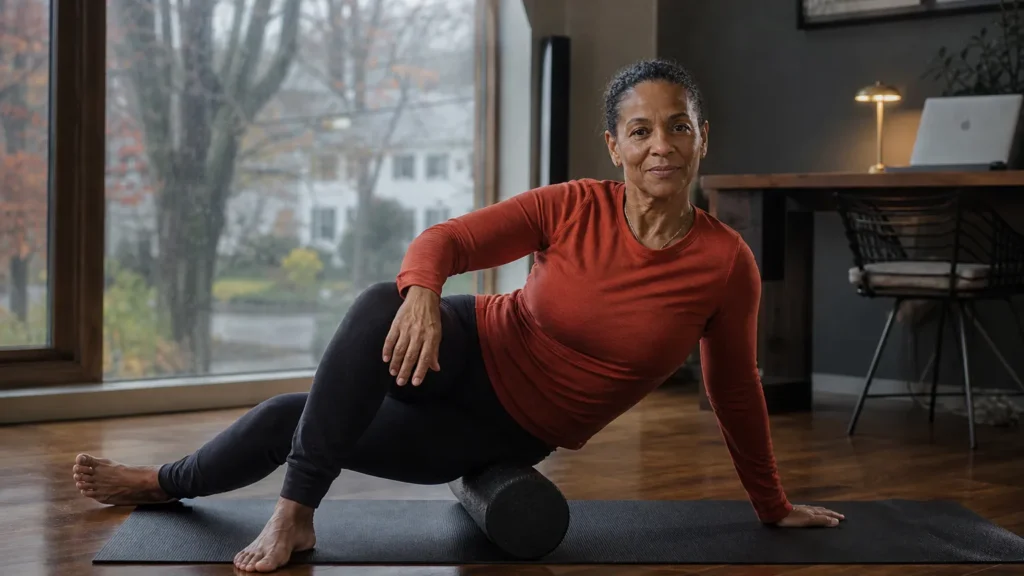
No gym. No gadgets. You need a foam roller and a patch of floor.
- Roll: four foam-roller zones around the hip and buttock
- Move: four movements
- Strengthen: three exercises
Boring is good. Boring is consistent. Some people notice the familiar ache eases as the weeks stack up. Others do not. That is information too. If the ache keeps returning, you don’t need a harder workout. You need an exam.
How does FIT Clinic examine back and hip pain?
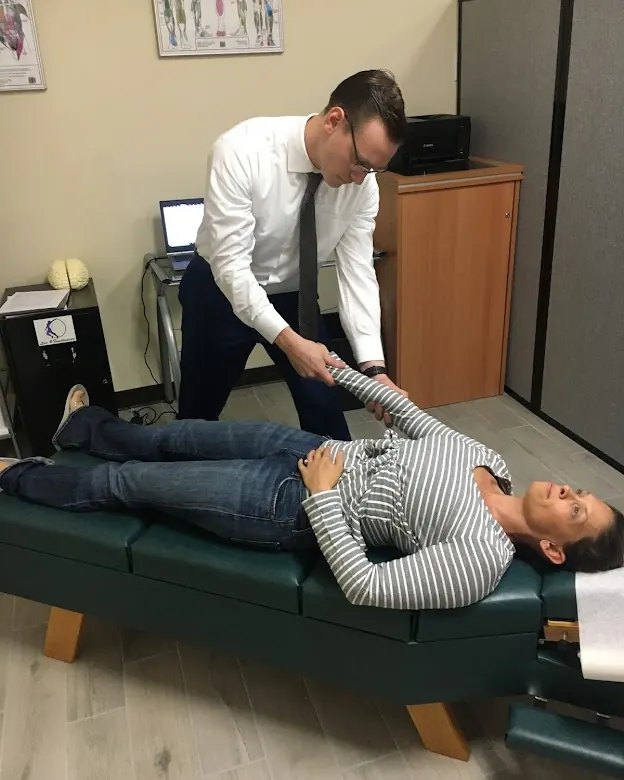
At FIT Clinic the exam comes before any plan. Dr. Michael Brandon, DC, starts from three questions: “What is their pain, where is their pain, and what motions or activities cause it.”
He is plain about it with new patients: “I explain the options and tell them I don’t actually know what they need yet — I need to go over the exam first.” Our clinical team does not rely on forceful cracking either. In his words, “You don’t need to ‘crack’ or give that large adjustment to people.” When FIT Clinic is not the right fit, he points the patient to someone who can help.
If you want the longer version of how the back works, I wrote Why Your Back Hurts, and the full edition is free on fitclinic.co. For broader context on hip problems, see our hip pain page, and if you are wondering whether to wait, read Back Pain Normal for My Age? What to Check Before You Wait. Lifters with a pinching hip may also want Do Hip Impingement Strength Exercises Help More Than Stretching Does?
Frequently asked questions
How long does lower back pain last after lifting something heavy?
It varies from person to person, and no single timeline fits everyone. Many simple strains settle with normal, gentle activity, but pain that worsens week by week, wakes you at night, or followed a pop and bruising deserves an exam. Keep moving within comfort rather than resting in bed.
What should I do if my lower back spasms and I can't move?
First check for red flags: bladder or bowel changes, saddle numbness, leg weakness, fever or chest pain mean emergency care. Without those, find a comfortable position, breathe slowly, and try small, easy movements as soon as you can. If you cannot get up or the spasm does not ease, get seen.
Should I stop deadlifting if my back hurts?
Stop the heavy work while the ache is active, and do not train through sharp pain. Lighter hinge patterns and hip work may still be possible, depending on what an exam finds. Many lifters return to the barbell once they know where the pain comes from and how their hips are moving.
Can a foam roller make hip and back pain worse?
It can if you press too hard or roll right over a sore spine. Roll the muscle around the hip and buttock, not the bones, and use steady, tolerable pressure. If rolling brings on numbness, tingling or pain below the knee, stop and have it examined.
Is sitting less enough to fix desk-related back pain?
Standing up more often may help some people, but the research on sitting time and back pain is mixed. Strength and mobility around the hips likely matter as much as the chair. Combining short breaks with a regular hip routine gives you two levers instead of one.
The Bottom Line
If your back aches after long sitting and heavy leg days, press deep in the buttock and the side of the hip. If you find that spot, and bending does not change the ache much, the hip deserves a look. Clear the red flags first. Then give the daily routine a fair, consistent trial, and get an exam if the ache keeps returning.
FIT Clinic is at 8 Merchants Way in Colts Neck, by the corner of Route 34 and County Route 537, with free parking in front of and behind the building. Book an exam or call or text 848-301-1515. To start at home, download the free manual, It’s Not Your Back: The Deep Hip and Glute Trigger Point Manual for Desk Sitters Who Lift.
Book your first visit at https://fitclinic.co/book/ — or call or text 848-301-1515.
FIT Clinic at Functionised — 8 Merchants Way, Colts Neck, NJ 07722.
Sources
- Hip-Spine Syndrome – Orthobullets
- Hip and Lumbar Spine Physical Examination Findings in People Presenting With Low Back Pain – JOSPT
- Occurrence and inter-rater reliability of myofascial trigger points in the quadratus lumborum and gluteus medius – PubMed
- Associations Between Gluteus Medius Trigger Points With Hip Passive Range of Movement and Muscle Strength in Chronic Nonspecific Low Back Pain
- Effectiveness of Dry Needling and Ischemic Trigger Point Compression in the Gluteus Medius in Non-Specific Low Back Pain – PMC
- Which patients with low back pain benefit from deadlift training?
- Low back pain and sitting time, posture and behavior in office workers: A scoping review
- Cauda Equina – Chesterfield Royal Hospital NHS
- Did you know? Cauda equina syndrome – NHS Resolution
Get The Thrive Letter. One short email from Jim every Thursday: one idea, one 60-second fix you can feel, and what to do next. Unsubscribe any time.