Weight Loss Injections Colts Neck: Why Strength Work Matters
Key takeaways
- Moving less on a GLP-1 weight loss injection can cost you strength, because these drugs take lean muscle along with fat and activity is the signal that tells muscle to stay.
- A study presented at ENDO 2026 found that adults who started drugs such as semaglutide and tirzepatide took fewer steps and did less brisk exercise afterwards.
Moving less on a GLP-1 weight loss injection can cost you strength, because these drugs take lean muscle along with fat and activity is the signal that tells muscle to stay. A study presented at ENDO 2026 found that adults who started drugs such as semaglutide and tirzepatide took fewer steps and did less brisk exercise afterwards. Regular walking plus strength work on most weeks may help protect what the scale cannot show.
What did the ENDO 2026 study find about GLP-1 drugs and exercise?
People who started a GLP-1 drug moved less, not more. That was the finding presented at ENDO 2026 in Chicago on June 13, 2026. If you searched weight loss injections Colts Neck, this is the result worth reading first. Adults with obesity who began semaglutide, tirzepatide or a related drug took fewer steps and did less brisk exercise after starting.
Here is how the researchers got there. They used the NIH All of Us Research Program, which links health records to Fitbit data. Of 1,950 adults who started a GLP-1 drug, 753 had enough wearable data to analyse. On average, daily steps fell from 5,047 to 4,487, and brisk activity fell from 28 to 22 minutes a day. The group was mostly women, with a mean age of 52.7 years.
Sit with that for a moment. Many people assume a lighter body naturally moves more. The study lead said the data suggest otherwise, and that exercise “cannot be optional” on these drugs. One caution belongs here. This was a retrospective look at wearable data, so it shows a pattern, not a cause.
Why does moving less matter more when the drug also takes muscle?
It matters because the drug and the couch draw on the same account. In the SURMOUNT-1 body-composition analysis, about a quarter of the weight lost on tirzepatide was lean mass. Our earlier piece on what the muscle-loss data shows covers those numbers in depth.
Let me explain the mechanism in plain English. Muscle is costly tissue to keep. Your body holds on to it when you keep asking it to work. Cut the food coming in, and the body looks for things to spend less on. Cut the load at the same time, and you hand it the reason. That is why the study team called physical activity essential for preserving strength on these medications.
Here is the real problem. The jeans fit. The scale is down. The stairs feel a little harder. Everything on the scale looks like progress, while stairs, groceries and getting up off the floor depend on muscle, not on weight.
The scale is not the score. What you can still do is the score.
Can exercise protect muscle on weight loss injections Colts Neck adults use?
In trials, exercise added to a GLP-1 drug may help hold on to lean mass. The clearest test so far used liraglutide, an older drug in the same class. In a randomised trial in the New England Journal of Medicine, adults who had lost weight on a low-calorie diet then spent a year on exercise, liraglutide, both, or placebo.
The combination group did best. The authors report that exercise plus liraglutide roughly doubled the fat loss of either treatment alone and preserved lean mass. A secondary analysis of the same trial found that strength relative to body weight rose in all three active groups compared with placebo. The honest answer is that this trial used liraglutide after a diet. It does not prove the same result with semaglutide or tirzepatide.
Still, the evidence points one way. The drug changes appetite. Training sends the signal to keep muscle. One without the other leaves half the job undone.
Why might pain make someone on a GLP-1 move less?
Pain may be one reason, and the ENDO data hint at it. In HealthDay’s report on the study, declines were greater among patients with musculoskeletal pain. A sore knee, a stiff back or a hip that catches on the stairs makes the walk easy to skip.
Stiffness is not the injury; it is the message. It says something in the chain is not moving well, and it shows up in the very activities that protect muscle. Dr. Michael Brandon, DC, our treating clinician, starts with three questions: “What is their pain, where is their pain, and what motions or activities cause it.” That order makes sense here, because a training plan stacked on an unexplained pain is a plan built on guessing.
This is where our mobility and active-adult care fits. The aim is to find what is limiting the movement, so walking and strength work can stay on the calendar. If you aren’t testing, you’re guessing.
How much activity should an adult on a GLP-1 aim for?
The federal baseline is a sensible floor: 150 minutes of moderate activity and 2 days of muscle strengthening each week. For adults 65 and older, the CDC adds balance activities to that list. Your prescribing physician should set anything beyond that for your own health history.
Strength days should work all major muscle groups: legs, hips, back, abdomen, chest, shoulders and arms. Boring is good. Squats to a chair, carries, rows and presses all count. For older readers who want something they can repeat, our piece on short strength workouts seniors can repeat daily looks at what that evidence supports. Note your daily steps before the first dose, then watch whether they drift.
You own one vehicle. I coached strength and conditioning for the Toronto Blue Jays, the Tampa Bay Buccaneers and the University of South Florida. I was later performance coach to the boxers Antonio Tarver and Antonio Tarver Jr. The athletes changed, and the principle did not: muscle answers the work you ask of it. That holds for a boxer making weight and for anyone on a weight loss injection.
What does a FIT Clinic visit look like if you are on a GLP-1?
It starts with an exam and a plain-English explanation, not a plan handed over at the door. Dr. Brandon puts it this way: “I explain the options and tell them I don’t actually know what they need yet — I need to go over the exam first.” Nothing happens without your OK.
Depending on what the exam shows, care may include hands-on chiropractic care, mobility work for active adults, or FIT Stretch. FIT Stretch is one-on-one assisted stretching that pairs flexibility with the strength to keep it. Dr. Brandon also offers nutrition consultations. If the problem belongs with someone else, he says so: “If I can’t be the one to help them, I want to at least put them in the right direction to find someone who can.”
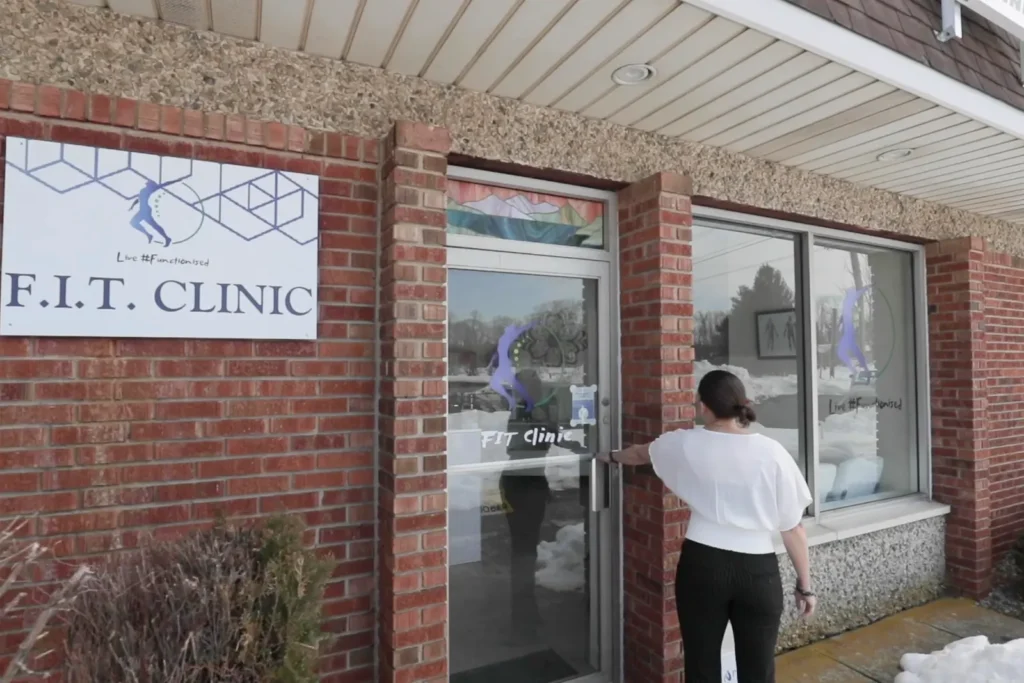
FIT Clinic is at 8 Merchants Way in Colts Neck, by the corner of Route 34 and County Route 537. Parking is free in front of and behind the building.
Frequently asked questions
Are men more likely to move less after starting a GLP-1 drug?
In the ENDO 2026 data, yes. HealthDay reported that drops in daily steps and brisk activity were greater for men than for women. The study group was mostly women, so the finding in men rests on fewer people. Other studies need to confirm the pattern before anyone treats it as a rule.
In the ENDO 2026 data, yes. HealthDay reported that drops in daily steps and brisk activity were greater for men than for women. The study group was mostly women, so the finding in men rests on fewer people. Other studies need to confirm the pattern before anyone treats it as a rule.
Does everyone on semaglutide or tirzepatide become less active?
No. The ENDO 2026 finding is an average across a group, and an average hides the people who moved more. The study also included only people who already wore a Fitbit, who may not reflect everyone on these drugs. What it shows is a common drift worth watching for in yourself, not a fixed outcome.
No. The ENDO 2026 finding is an average across a group, and an average hides the people who moved more. The study also included only people who already wore a Fitbit, who may not reflect everyone on these drugs. What it shows is a common drift worth watching for in yourself, not a fixed outcome.
Is walking enough to keep muscle on a weight loss injection?
Walking helps, but federal guidelines count it as aerobic activity and list muscle strengthening as a separate weekly need. Walking keeps the heart and joints moving. Lifting, carrying and rising from a chair under load are what ask the muscle to stay. Most adults on these drugs may do best with both, not one.
Walking helps, but federal guidelines count it as aerobic activity and list muscle strengthening as a separate weekly need. Walking keeps the heart and joints moving. Lifting, carrying and rising from a chair under load are what ask the muscle to stay. Most adults on these drugs may do best with both, not one.
What should I do if nausea or fatigue on a GLP-1 keeps me from exercising?
Tell the physician who prescribes the drug, because side effects are theirs to manage and the dose may be part of the answer. In the meantime, a shorter, lighter session still keeps movement on the calendar. A brief walk or a few sets of chair stands keeps the habit alive until you feel ready for more.
Tell the physician who prescribes the drug, because side effects are theirs to manage and the dose may be part of the answer. In the meantime, a shorter, lighter session still keeps movement on the calendar. A brief walk or a few sets of chair stands keeps the habit alive until you feel ready for more.
The Bottom Line
If you are on a weight loss injection, or thinking about one, the drug is only half the plan. Keep the walks. Put strength work on the calendar. Track what your body can do, not only what it weighs. If pain is what keeps you on the couch, that deserves an honest look while the habit is still yours to keep.
Book a visit at fitclinic.co/book, or call or text (848) 301-1515. Our clinical team starts with the exam and explains what it finds in plain English. You decide what happens next.
Book your first visit at https://fitclinic.co/book/ — or call or text 848-301-1515.
FIT Clinic at Functionised — 8 Merchants Way, Colts Neck, NJ 07722.
Sources
- Exercise decreases among people taking GLP-1 medication (Endocrine Society, ENDO 2026)
- ENDO: Significant Decrease in Physical Activity Seen After GLP-1 Receptor Agonist Initiation (HealthDay)
- People taking GLP-1 weight loss drugs like Ozempic started moving less (ScienceDaily)
- Body composition changes during weight reduction with tirzepatide in the SURMOUNT-1 study (PubMed)
- Healthy Weight Loss Maintenance with Exercise, Liraglutide, or Both Combined (NEJM)
- Physical Fitness with Exercise and GLP-1 Receptor Agonist Treatment Alone or Combined After Diet-Induced Weight Loss (PMC)
- Adding Physical Activity as an Adult (CDC)
- Older Adult Activity: An Overview (CDC)