Hip arthritis exercise: why your result may beat the average

Key takeaways
- Hip arthritis exercise may help, but an average result across a group hides the people who improve a great deal and the people who barely change.
- One common reason a plan disappoints is that nobody first checked what is actually sore: the hip joint, the muscles around it, or the lower back.
Hip arthritis exercise may help, but an average result across a group hides the people who improve a great deal and the people who barely change. One common reason a plan disappoints is that nobody first checked what is actually sore: the hip joint, the muscles around it, or the lower back. If the pain keeps getting worse despite sensible care, an orthopedist is the right call.
Does hip arthritis exercise actually help?
It can, but it does not help everyone equally. Hip arthritis exercise remains the standard advice, and Cleveland Clinic calls exercise and lifestyle changes essential to managing arthritis pain and keeping your mobility. The American Academy of Orthopaedic Surgeons notes that specific exercises can help range of motion, flexibility and strength in the hip and leg. So exercise belongs in the plan. The question is which exercise, for which hip.
Here is the real problem. A study result is an average. An average is one number standing in for a room full of people. Some of them improved a lot. Some improved a little. Some did not change at all. Put them together and you get a modest number, which tells you about the room and very little about you.
If you were handed a sheet of exercises and told to get on with it, a small result is not proof your hip is beyond help. It may only prove the sheet was written for the average hip. Before FIT Clinic, I was a strength and conditioning coach for the Toronto Blue Jays, the Tampa Bay Buccaneers and the University of South Florida. The principle from that world applies here too. If you aren’t testing, you’re guessing.
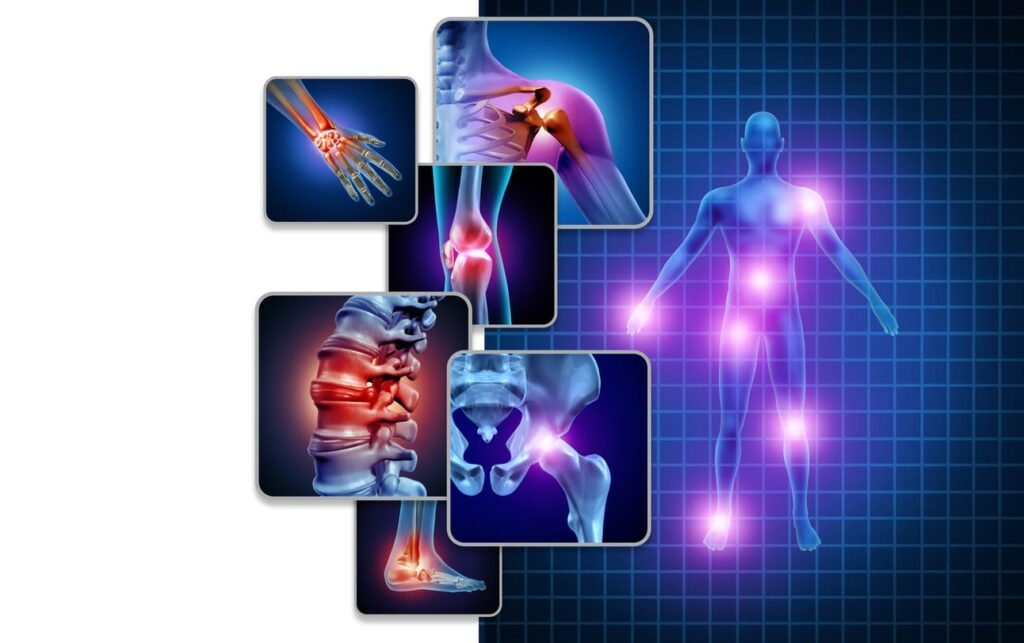
What is osteoarthritis of the hip?
Hip osteoarthritis is the gradual wearing of the cartilage that cushions the hip joint, along with changes in the rest of the joint. The AAOS describes the cartilage turning frayed and rough as the joint space between the bones shrinks. The NHS team at Harrogate explains that this damage causes friction and stops the joint moving smoothly.
It is not only a cartilage problem. A primer from PubMed Central lists cartilage loss, bone spurs, cysts, loose ligaments, muscle weakness and possible inflammation of the joint lining as part of the process. Sit with that for a moment. Muscle weakness is on the list, which is exactly why strength work belongs in care. The same primer estimates that more than 27 million Americans live with osteoarthritis.
It is common with age. Cleveland Clinic says osteoarthritis affects the majority of people older than 55, and the hip is the second most common joint it affects. The typical symptom is pain around the hip, generally in the groin, which usually builds slowly but can also start suddenly.
Is hip pain coming from the joint, the muscles or the lower back?
It can come from any of the three, and the answer changes which exercise makes sense. Cleveland Clinic defines hip pain as pain or discomfort in or around your hip joint, and that covers a lot of ground.
Muscles are the second suspect. The hip flexors run along the front of the upper thigh. Hospital for Special Surgery notes that tight hip flexors can cause pain at the front of the hip that gets worse with long sitting, running or cycling. The lower back is the third suspect. That is why our clinical team examines the lower back along with the hip before anyone talks about a plan. If the back is part of your story, our piece on what actually helped people prevent chronic back pain is worth reading next.
Dr. Michael Brandon, DC, who treats patients at FIT Clinic, puts the starting questions plainly: “What is their pain, where is their pain, and what motions or activities cause it.” Here is the test. If your exercises were chosen before anyone asked those three questions, they were chosen for someone else’s hip.
How can you relieve hip and leg pain at home?
Start by easing off what provokes it, using simple pain relief, and choosing activity more carefully. Cleveland Clinic says you can usually treat hip pain at home with a break from physical activity and over-the-counter pain relievers.
Activity choice matters more than people expect. The orthopaedic team at the University of Washington lists rest, activity changes and medication among the ways to manage mild arthritis pain. They also suggest choosing activities that don’t reproduce the arthritic pain. That is not giving up on movement. It is picking the version of movement your hip will tolerate today.
Then build strength around the joint. Cleveland Clinic notes a physical therapist may show you stretches and exercises that strengthen the muscles around your affected hip. Boring is good here. A short routine you repeat compounds; an ambitious one you abandon does not. We looked at whether short strength workouts seniors can repeat daily really work, and the same logic applies to the hip.
Can you really relieve hip flexor pain in seconds?
Not reliably. The short time in most stretching advice is a hold time, not a promise of relief. Hospital for Special Surgery suggests holding each hip flexor stretch for 30 seconds on each side, for three sets, at least twice a day.
The same physical therapist recommends changing position every 30 to 45 minutes to head off tightness. For anyone who sits for long stretches at a desk or behind the wheel, that habit may matter as much as the stretch itself.
Here is the reframe. Stiffness is not the injury; it is the message. If a stretch eases the front of your hip and the ease holds, that tells you something useful about the muscles. If it fades within minutes, or the ache sits deep in the groin, the stretch may be aimed at the wrong tissue. That is a reason to get the hip examined, not a reason to stretch harder.
When is an orthopedist the right call for hip arthritis?
The University of Washington team lists joint injections among the options for arthritis pain, and that conversation belongs with an orthopedic specialist.
Chiropractic care at FIT Clinic is hands-on care for how joints, muscles and nerves work together, including the hips. It works alongside medical care, not instead of it. Dr. Brandon describes the referral side of the job this way: “If I can’t be the one to help them, I want to at least put them in the right direction to find someone who can.”
Waiting has a quiet cost. Every month spent guessing is a month the muscles around the hip are not getting the right work. For patients coming from Lincroft, Holmdel or Middletown, the clinic sits at 8 Merchants Way in Colts Neck, by the corner of Route 34 and County Route 537. Parking is free in front of and behind the building, which matters when getting in and out of a car is part of the problem.
Frequently asked questions
Should I use heat or ice on an arthritic hip?
Either may help, depending on what you feel. A hip osteoarthritis primer on PubMed Central notes that heat can soothe stiff joints and tired muscles, while cold slows circulation, reduces swelling and eases acute pain. Many people find heat suits morning stiffness and cold suits a flare after too much activity. Stop either one if it makes the pain worse.
Either may help, depending on what you feel. A hip osteoarthritis primer on PubMed Central notes that heat can soothe stiff joints and tired muscles, while cold slows circulation, reduces swelling and eases acute pain. Many people find heat suits morning stiffness and cold suits a flare after too much activity. Stop either one if it makes the pain worse.
Does losing weight help hip arthritis?
It may ease the load on the joint. The NHS team at Harrogate notes that extra weight puts a higher demand on the joints and is a risk factor for earlier osteoarthritis. The University of Washington orthopaedic team lists keeping an appropriate body weight as one of the things patients can do to help decrease arthritic symptoms.
It may ease the load on the joint. The NHS team at Harrogate notes that extra weight puts a higher demand on the joints and is a risk factor for earlier osteoarthritis. The University of Washington orthopaedic team lists keeping an appropriate body weight as one of the things patients can do to help decrease arthritic symptoms.
Is a grinding or clicking hip a sign of arthritis?
It can be one of the signs, but noise alone does not tell you what is going on. The NHS team at Harrogate lists crepitus, a grinding or crackling sensation in the joint, alongside pain, stiffness and swelling as possible osteoarthritis symptoms. A noisy hip without pain or lost movement is a different situation from one that grinds and hurts.
It can be one of the signs, but noise alone does not tell you what is going on. The NHS team at Harrogate lists crepitus, a grinding or crackling sensation in the joint, alongside pain, stiffness and swelling as possible osteoarthritis symptoms. A noisy hip without pain or lost movement is a different situation from one that grinds and hurts.
Do chiropractic treatments for the hip involve cracking?
Not necessarily. Care at FIT Clinic is hands-on, and nothing happens without your agreement. Dr. Michael Brandon puts it simply: “You don’t need to ‘crack’ or give that large adjustment to people.” Gentler techniques and movement work are options, and the choice depends on what the exam finds and what you are comfortable with.
Not necessarily. Care at FIT Clinic is hands-on, and nothing happens without your agreement. Dr. Michael Brandon puts it simply: “You don’t need to ‘crack’ or give that large adjustment to people.” Gentler techniques and movement work are options, and the choice depends on what the exam finds and what you are comfortable with.
What happens at a first visit for hip pain at FIT Clinic?
The first visit starts with questions and an exam, not a treatment plan. Dr. Brandon describes it this way: “I explain the options and tell them I don’t actually know what they need yet — I need to go over the exam first.” Everything gets explained in plain English, and you decide what happens next.
The first visit starts with questions and an exam, not a treatment plan. Dr. Brandon describes it this way: “I explain the options and tell them I don’t actually know what they need yet — I need to go over the exam first.” Everything gets explained in plain English, and you decide what happens next.
The Bottom Line
If exercise for your hip has felt like a letdown, the honest answer is that you may have been given the average plan for an average hip. Your hip is not average. What actually matters is finding out whether the pain lives in the joint, the muscles or the lower back, then matching the work to that. Keep moving in ways your hip tolerates, build strength around it, and see an orthopedist if the pain keeps climbing.
When you want an honest look, our clinical team at FIT Clinic, 8 Merchants Way, Colts Neck, will examine the hip and the back and explain what we find before anyone talks about treatment. Book an evaluation, or call or text 848-301-1515.
Book your first visit at https://fitclinic.co/book/ — or call or text 848-301-1515.
FIT Clinic at Functionised — 8 Merchants Way, Colts Neck, NJ 07722.
Sources
- Hospital for Special Surgery (HSS): Four Hip Flexor Stretches to Relieve Tightness, from a PT
- National Institutes of Health / PMC (PubMed Central): Hip Osteoarthritis: A Primer
- Cleveland Clinic: Is My Hip Pain Hip Arthritis?
- Cleveland Clinic: What Causes Hip Pain?
- AAOS (American Academy of Orthopaedic Surgeons): Hip Osteoarthritis – OrthoInfo – AAOS
- HDFT NHS: Osteoarthritis of the hip & knee
- University of Washington Orthopaedics: Osteoarthritis of the Hip (Hip Arthritis)